The timeless elegance of Kashmar-Carpets: Handmade works of art from Persia
The fascination of carpets: A look at the timeless elegance of Kashmar-carpets
Introduction
Carpets are far more than just textile floor coverings. They are an expression of culture, tradition, and craftsmanship. In particular, the KashmarCarpets from Persia are true masterpieces, captivating with their breathtaking beauty and the quality of their craftsmanship. In this article, we take an in-depth look at the world of carpets, especially the... KashmarExplore carpets and discover why they are considered timelessly elegant. From their history and production to the different styles and their care – learn everything you need to know about these handcrafted works of art.
The history of carpet art
Origins of carpet weaving
The art of carpet weaving has a long and rich history dating back to ancient Persia. The first known carpets date back to the 5th century BC and were made in the region of present-day Iran. These early carpets were often decorated with geometric patterns and served both as practical floor coverings and as status symbols.
The development of the Kashmar-carpets
The city Kashmar, located in northeastern Iran, has become a center for carpet production. KashmarThese carpets are distinguished by their fineness and the use of high-quality materials. The tradition of carpet weaving in this region dates back decades and is known for its combination of traditional and modern designs. Today, they are considered Kashmar-Carpets considered some of the best handmade carpets in the world.
Features of the Kashmar-carpets
materials and quality
KashmarCarpets are primarily made from high-quality wool, silk, and cotton. Wool is prized for its durability and softness, while silk adds a touch of luxury. Only the finest raw materials are selected during production, resulting in long-lasting and resilient carpets.
designs and patterns
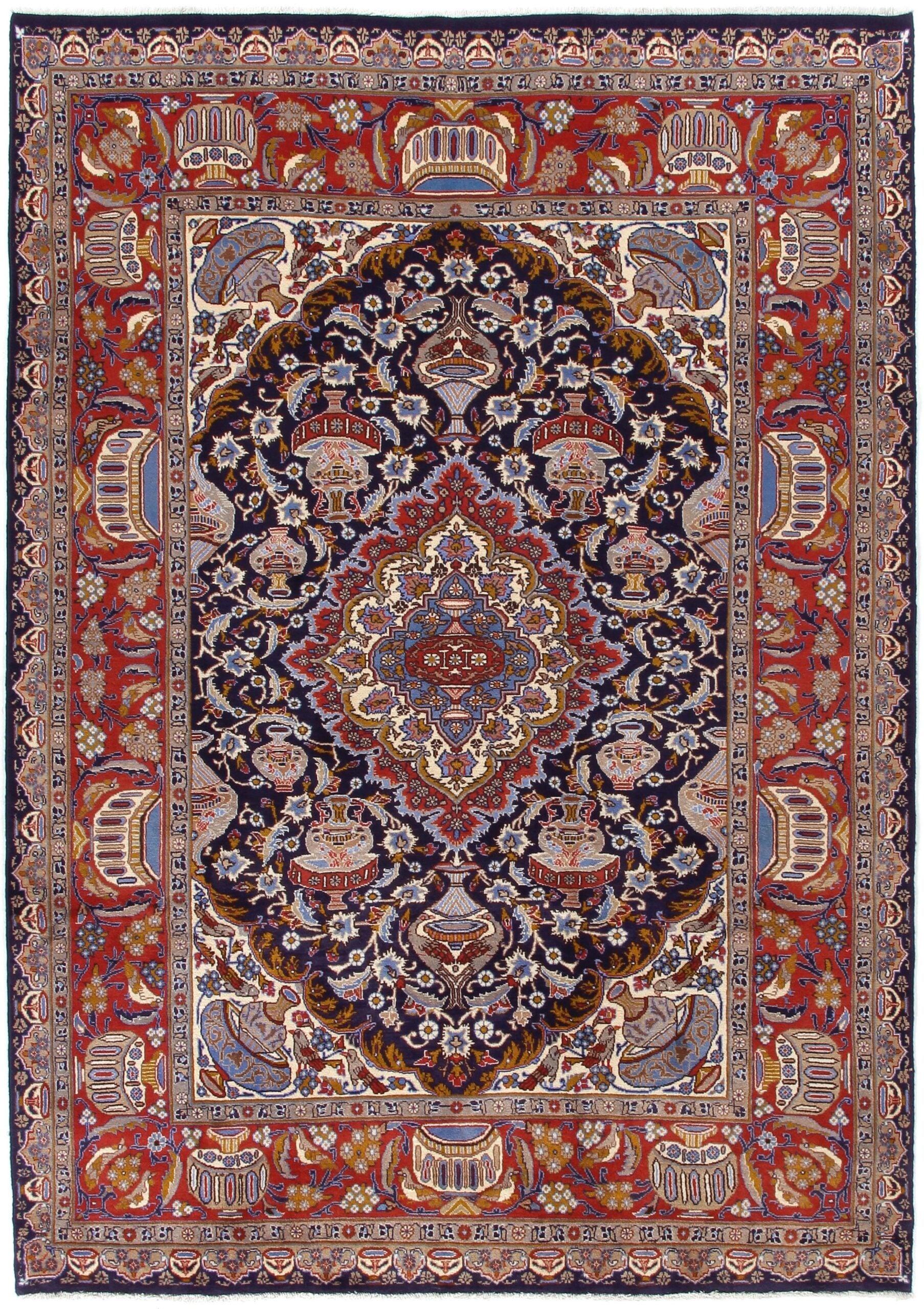
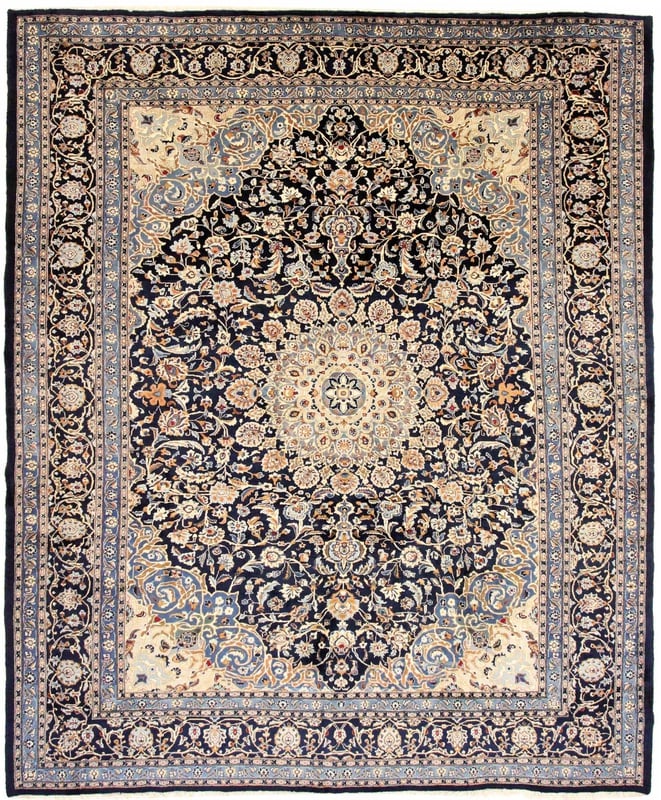
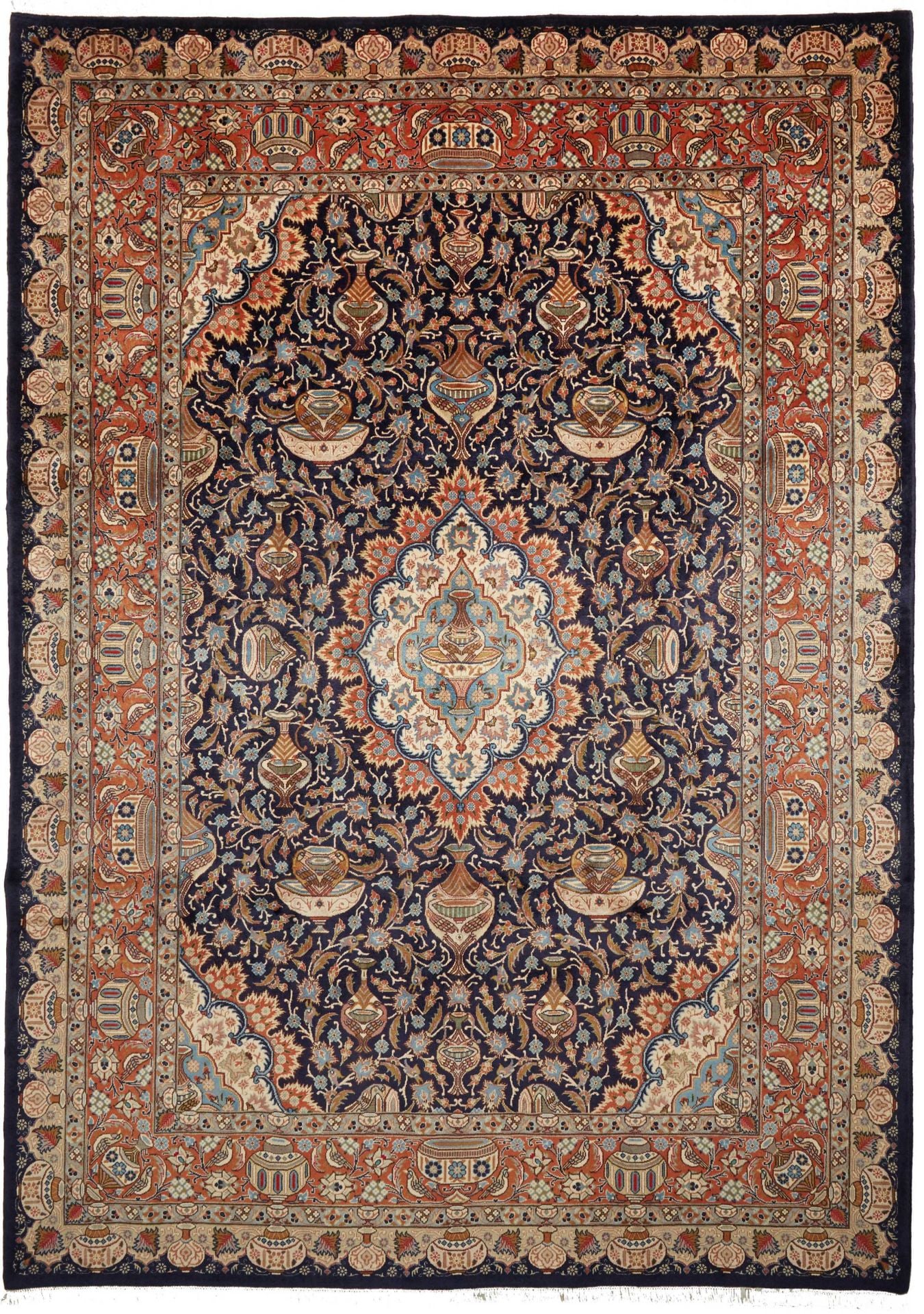
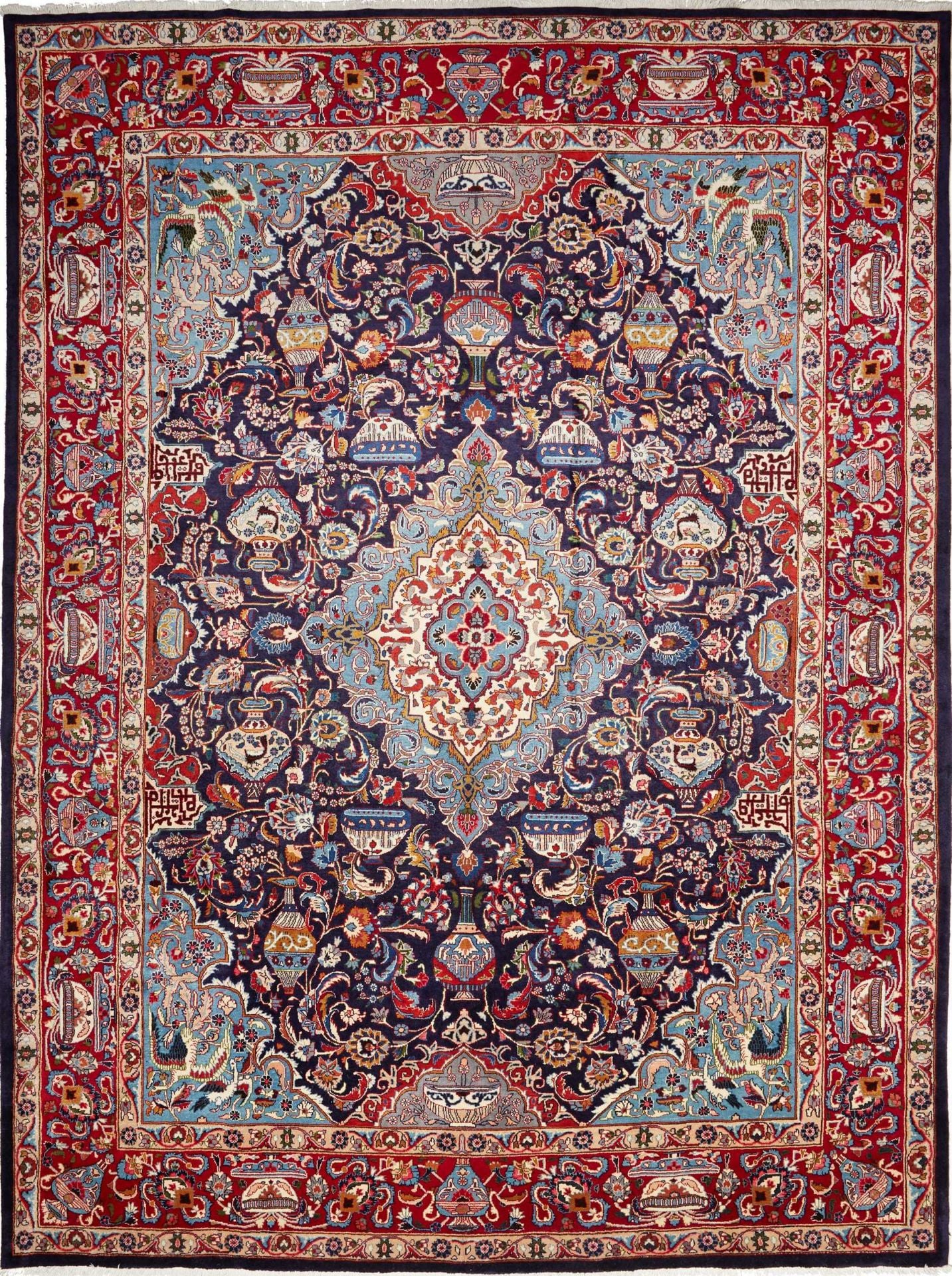
The designs of KashmarCarpets are diverse and characterized by vibrant colors and intricate patterns. Floral motifs, geometric shapes, and traditional Persian elements are frequently found. These carpets often feature warm reds, deep blues, and greens, adding an elegant touch to any room.
The manufacture of Kashmar-carpets
The weaving process
The production of one KashmarCarpet making is a time-consuming process that requires considerable skill and experience. First, the material is carefully prepared and dyed. The coloring is often done naturally, resulting in rich and long-lasting hues.
The skilled knotters then begin the actual weaving of the rug. Depending on the complexity of the design, several months or even years can be invested in the completion of a single rug. Each knotting technique brings the pattern to life, requiring both technical and creative skills.
Use of traditional techniques
The KashmarThese carpets are typically woven using the traditional Turkish knotting technique, known for its durability. This technique allows for the creation of fine details and complex patterns. The weavers use specialized tools to ensure their precise work.
The meaning of Kashmar-carpets
Cultural expression
KashmarCarpets are not just simple furnishings, but also cultural symbols. They tell stories about the traditions, customs, and everyday life of the people in that region. Each carpet is a timeless work of art that reflects the passion and craftsmanship of its creators.
Investment
carpets off Kashmar They are not only aesthetically pleasing, but also a valuable investment. Handmade rugs increase in value over time, especially if they are well cared for. The demand for KashmarThe market for carpets in the art market is growing continuously, and collectors appreciate the uniqueness and rarity of these works.
Care and maintenance of Kashmar-carpets
Regular cleaning
Regular care is crucial to maintaining the beauty and longevity of your Kashmar-to ensure the health of your carpets. It is recommended to have carpets professionally cleaned every six to twelve months to remove dirt and dust without damaging the material.
Protection against damage
To avoid damage, the carpet should be protected from direct sunlight, as this can cause color fading. Using an underlay can also help protect the carpet and extend its lifespan.
Styles and trends in the carpet world
Traditional vs. modern designs
KashmarCarpets are available in both traditional and modern designs. While traditional carpets often draw on centuries-old patterns and techniques, modern designs combine contemporary elements with classic craftsmanship. This allows for a Kashmar-to integrate carpet into any type of interior.
Trendy colors and materials
Current trends show a growing interest in neutral and earthy colors that are both timeless and modern. KashmarCarpets that embrace these trends are ideal for minimalist living spaces, as they serve as a harmonious complement to various interior design styles.
Conclusion
KashmarCarpets are more than just floor coverings; they are handcrafted works of art that combine history, tradition, and craftsmanship. These carpets lend a timeless elegance to any room and represent a valuable investment that enhances the beauty of your home. If you are looking for a KashmarWhen you invest in a carpet, you acquire not only a piece of art, but also a piece of culture and history.
Frequently Asked Questions (FAQ)
1. How can I verify the authenticity of a Kashmar-Check the carpets?
To ensure the authenticity of a KashmarTo check carpets, pay attention to certain features such as the knotting technique, the material composition, and the dyes. Often, genuine carpets have... Kashmar-Carpets with irregular and unique patterns that do not occur in machine-made carpets.
2. How do I care for my Kashmar-Carpet, right?
For your KashmarTo care for your carpet, clean it regularly to remove dust and dirt. Avoid direct sunlight and use a professional cleaning service if necessary to prevent damage.
3. Are KashmarAre carpets a good investment?
Yes, KashmarCarpets are a valuable investment due to their craftsmanship and the use of high-quality materials. They appreciate in value and are a timeless piece of art that can be both used and viewed as an investment.