The artistic tradition of Hereke-Carpets: Craftsmanship and history in every knot
The artistic tradition of Hereke-Carpets: Craftsmanship and history in every knot
Carpets are more than just floor coverings; they are stories, traditions, and cultures woven into every knot. Especially the HerekeCarpets from Turkey represent the highest level of craftsmanship and a rich cultural history. In this article, we examine the origin, artistry, and special characteristics of these carpets. Hereke-carpets and give you a deep insight into the fascinating world of carpet art.
The origin of the Hereke-carpets
The city HerekeLocated on the Sea of Marmara, it has been known for its exquisite hand-knotted carpets since the 19th century. The tradition of carpet weaving in this region has its roots in the Ottoman Empire, where the carpets were produced not only for personal use but also as valuable trade goods. The first HerekeCarpets were created for the palaces and residences of the Sultan and were a symbol of wealth and elegance.
In the 1860s, Sultan Abdulaziz decided to establish carpet production in Hereke to promote it. He imported skilled workers from Iran and the Central Asian region to improve quality and craftsmanship. This resulted in a unique fusion of Ottoman and Persian carpet making, which the Hereke-gives carpets their special character.
Materials and techniques
High-Quality Materials
The quality of a carpet depends largely on the materials used. HerekeCarpets are characterized by the use of fine, natural fibers. The most well-known materials are:
- WoolHigh-quality sheep's wool is used for most Hereke-carpets. It is soft, durable and has excellent dyeing properties.
- Silk: Some of the most magnificent HerekeThese carpets are made of pure silk. They have a smooth texture and radiate a characteristic sheen.
- Cotton: Often used as a backing for carpets, cotton ensures stability and durability.
The combination of these materials in different proportions allows the creation of carpets with unique properties and designs.
Traditional knotting process
The production of one HerekeCarpet making is a time-consuming process that requires a great deal of skill and dedication. The knotting process can take several months to years, depending on the size and complexity of the design.
A typical one HerekeThe carpet is knotted using the so-called "Turkish knot" technique. This technique allows for a high knot density, resulting in detailed patterns and long durability. To make one square meter HerekeDepending on the design, between 100.000 and 300.000 knots are used to knot a carpet.
The knotting technique is performed by hand, with artisans often passing on traditional knowledge through generations. The entire knotting process includes spinning the wool, dyeing with natural dyes, weaving on the loom, and the meticulous finishing that determines the final appearance of the rug.
Design and motifs
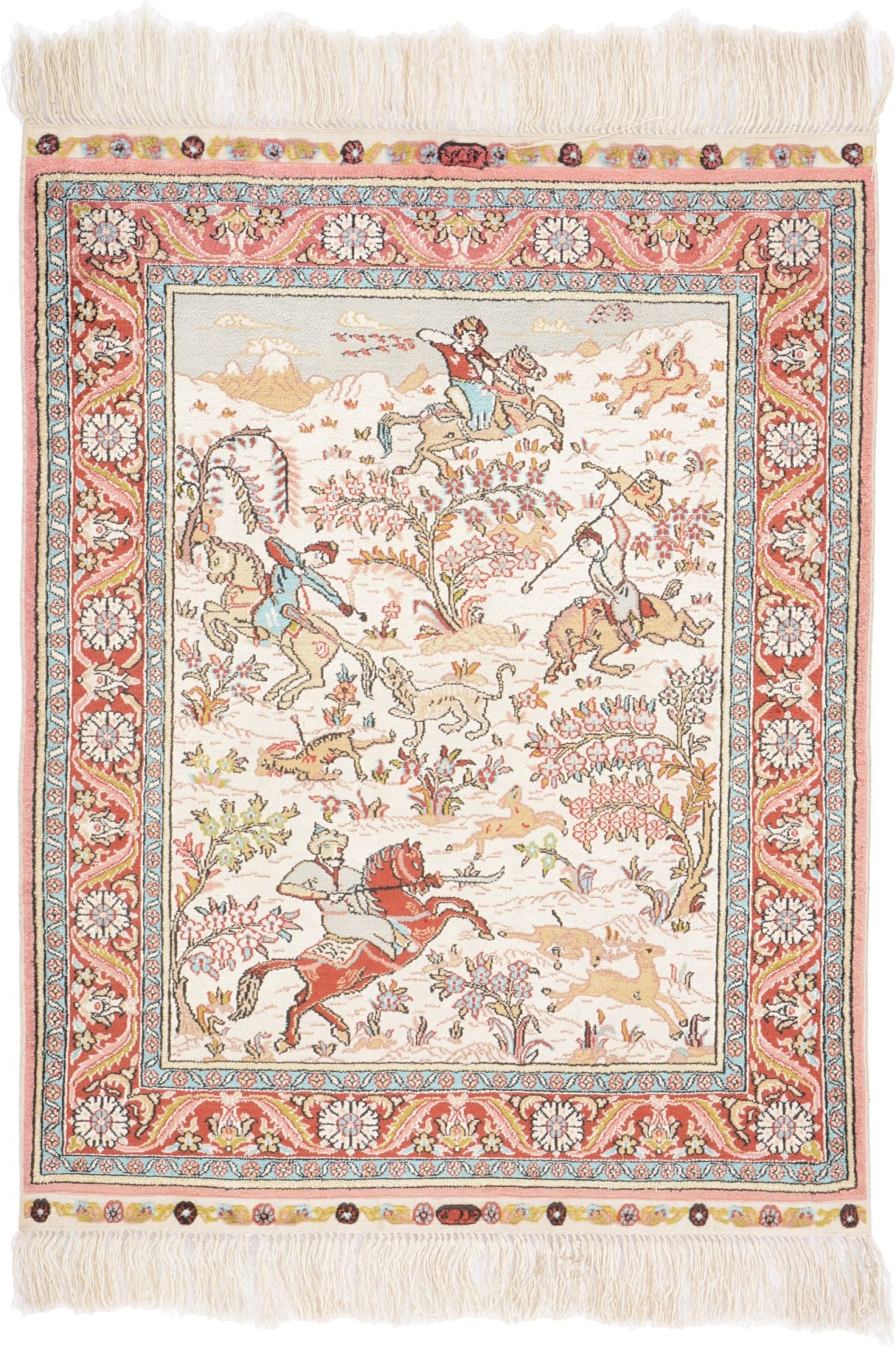
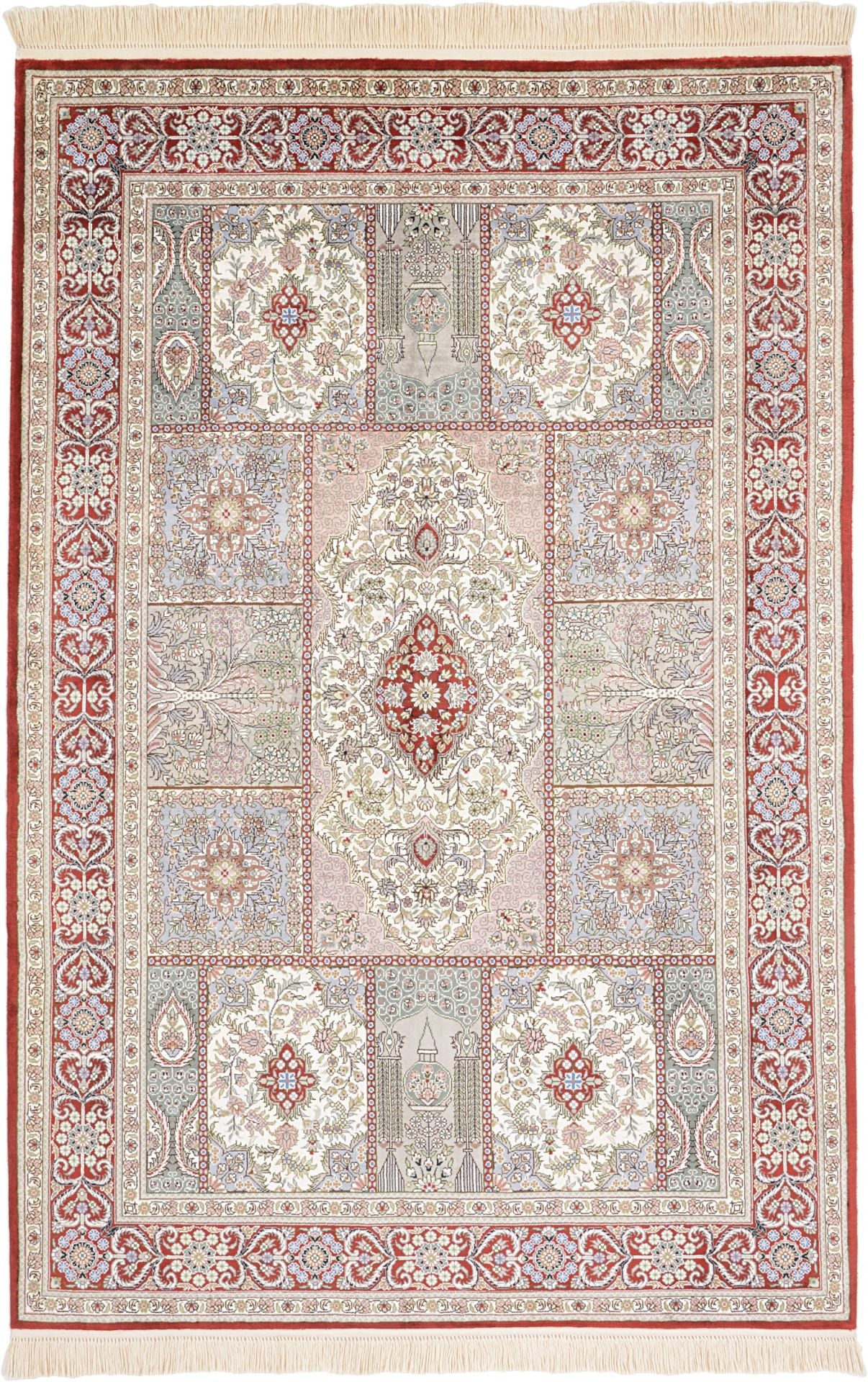
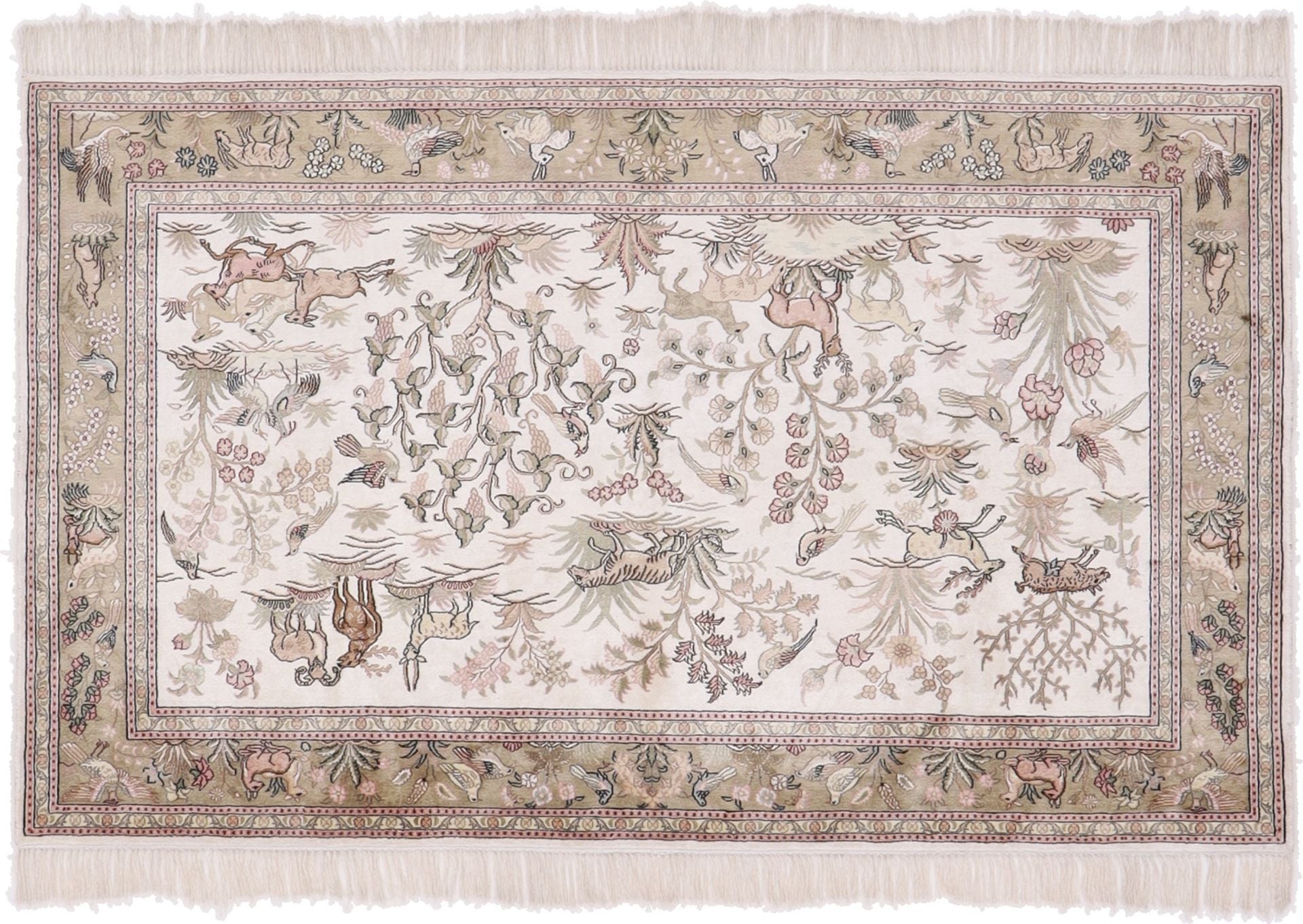
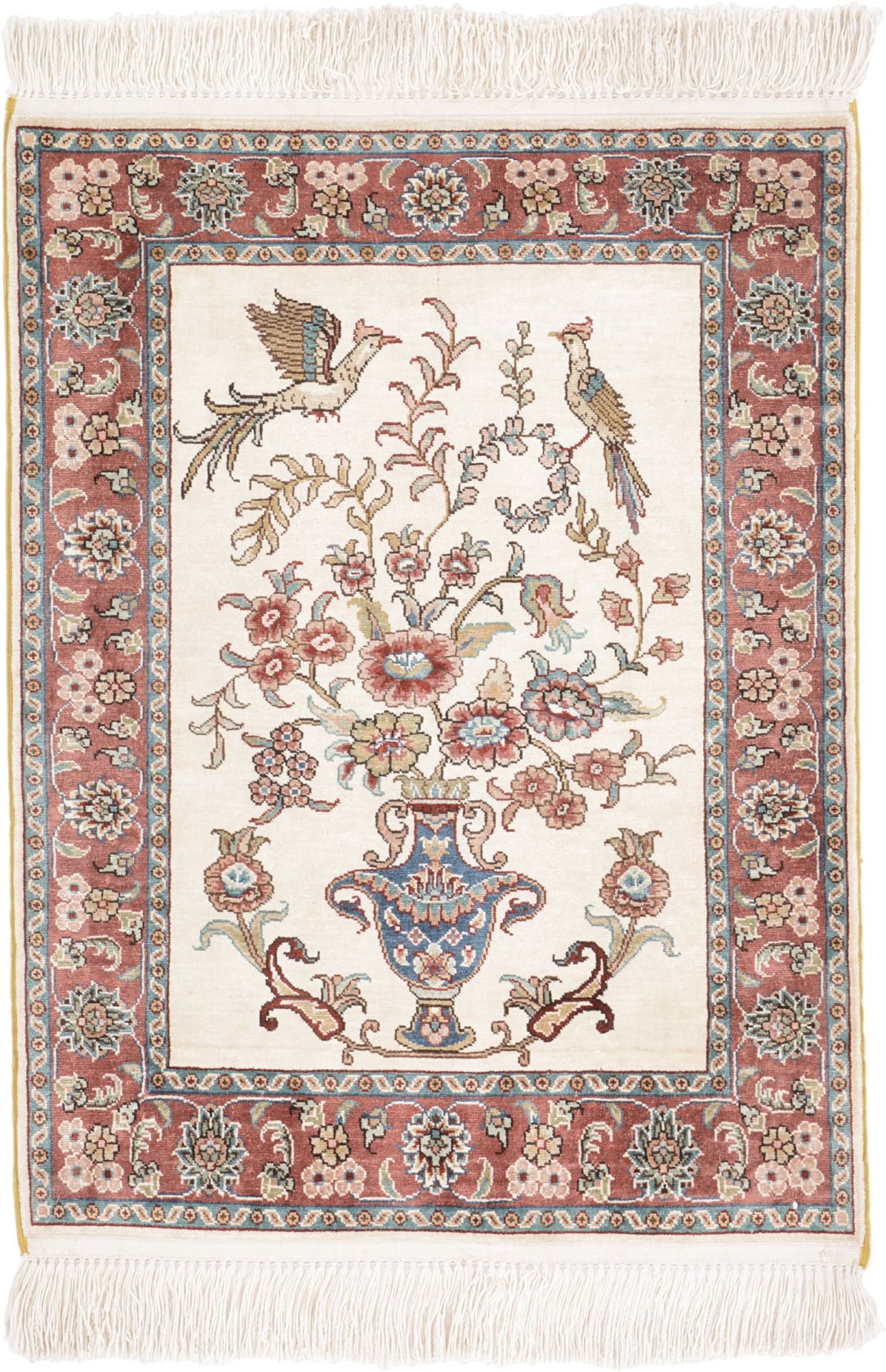
Hierke rugs are known for their variety of designs and motifs. The patterns are often inspired by nature, geometric shapes, and traditional Ottoman or Persian ornaments. Typical motifs include:
- flower pattern: These designs reflect the rich flora of Türkiye.
- Geometric shapes: Often combined with floral motifs, they create a harmonious overall picture.
- Symbolism: Many carpets contain symbolic depictions that tell stories of love, peace or happiness.
The color palettes are rich and vibrant, and the dyeing is mostly done with natural dyes from plants and minerals, which gives the carpets a special warmth and depth.
The cultural significance of Hereke-carpets
Status symbol of the Ottoman elite
In the Ottoman Empire there were HerekeCarpets were a sign of wealth and prestige. They were used not only in private homes, but also in Muslim places of worship such as mosques and madrasas, where they accentuated the splendor of the architecture.
In Ottoman society, carpets were also often gifts of great significance. They were presented on occasions such as weddings or state visits and often represented a symbol of pride in the nitrogen of the respective region.
Influence on Western art
The beauty of the HerekeCarpets have also attracted the interest of artists and DesignerThe interest in carpets was awakened in the West. In the 19th century, during the Orientalization period, carpets were presented in art museums and found their way into Western home decor and design. This interaction of Eastern and Western art has decisively influenced the development of modern interior design.
Care and protection of Hereke-carpets
Cleaning and care
To ensure the beauty and longevity of a HerekeProper care is essential to preserve carpets. Here are some tips:
- Regular vacuuming: To remove dirt and dust, the carpet should be vacuumed regularly but carefully using a vacuum cleaner without a brush attachment.
- Stain treatmentNote: If stains occur, act immediately to avoid permanent damage. Use a soft cloth and mild detergent.
- Professional cleaning: A thorough cleaning should be carried out by professionals every few years to protect the carpet and refresh the colors.
Protection from external influences
HerekeCarpets should be protected from direct sunlight and excessive moisture, as these factors can damage the colors and the material. This should be taken into account when choosing a location for the carpet. Regularly rotating the carpet can also help prevent uneven wear.
Conclusion
The artistic tradition of HerekeCarpets are an impressive example of craftsmanship passed down through generations. They are not only beautiful works of art, but also tell stories and reflect the cultural roots of the region. Every knot and every pattern is part of the history of the craft and the people who live and work at the heart of carpet production. Ensuring these carpets receive proper care is of great importance so that the next generation can hear the stories and the heritage of the Hereke-carpets can be preserved.
FAQ section
What are the main differences between Hereke-Carpets and other types of carpets?
HerekeCarpets are characterized by their high knot density, the use of fine materials such as wool and silk, and their elaborate patterns and designs. They are often specific to Ottoman and Persian culture, while other types of carpets reflect other regional styles and techniques.
How can I ensure that my Hereke-Is the carpet authentic?
The authenticity of a HerekeCarpets can be assessed by characteristics such as knot density, materials, and design. Certificates from reputable carpet dealers can also aid in evaluation. Pay attention to details that are typical for Hereke-Carpets are like the Turkish knot technique.
Sind HerekeAre these carpets suitable for everyday use?
Yes, HerekeCarpets can certainly be used in everyday life, especially those made of wool, which are robust and easy to care for. However, it is advisable to use particularly valuable and handmade silk carpets primarily for decorative purposes and to protect them from excessive wear and tear.