The art of Iranian carpets: tradition, technique and timeless beauty
Introduction to the world of carpets
Carpets are far more than just floor coverings; they are an expression of art, culture, and craftsmanship. Iranian carpets, in particular, have gained worldwide recognition and are known for their unique combination of tradition, technique, and timeless beauty. In this article, we will explore the fascinating world of carpets and discover why they hold a special place in our homes and hearts.
The history of Iranian carpets
The roots of Iranian carpet art date back to ancient Persia, where carpets served not only as practical objects but also as an expression of wealth and social status. As early as the 5th century BC, carpets were used in the palaces and temples of the ancient Persian civilization. The art of carpet weaving evolved over the centuries and was refined in various regions of Iran.
The Safavid dynasty (1501-1736) is often considered the golden era of carpet art. Many of the carpets considered masterpieces today were created during this period. The use of vibrant colors and complex patterns was characteristic of this era and is still appreciated today.
Carpet weaving techniques
The art of carpet weaving requires not only skill but also a deep understanding of colors, patterns, and materials. The two main techniques used in the weaving of Iranian carpets are the Persian knot (Ghiordes) and the Turkish knot (Senneh).
Persian knot technique
The Persian knot is known for its stability and the ability to create very fine and complex patterns. In this technique, the knot is tied in two passes around the warp threads, strengthening the structure of the rug.
Turkish knot
The Turkish knot, on the other hand, is easier to knot and is often used in carpets intended for export. This technique allows for faster production, but often has the disadvantage that the patterns are less detailed.
Materials for carpets
The choice of materials has a major influence on the quality and appearance of a carpet. Traditionally, Iranian carpets are made primarily from wool, silk, and cotton.
Wool
Wool is the most commonly used material for carpets. It is durable, provides excellent insulation, and has a natural ability to repel dirt. High-quality wool is usually obtained from sheep in the Highlands and is characterized by its softness and color intensity.
Silk
Silk is often used in combination with wool, giving a rug a special elegance and luster. Rugs made entirely of silk are very valuable and often considered collector's items. However, silk has the disadvantage of being more delicate and less robust than wool.
Cotton
Cotton is primarily used for the warp threads in knotting. It provides stability and durability. Cotton is less susceptible to wear and tear and is often used in carpets that are subject to frequent wear.
Patterns and symbolism
The patterns and designs of Iranian carpets are often influenced by cultural and historical elements. Each pattern has its own meaning and tells a story. Here are some of the most common patterns and their symbolism:
Floral patterns
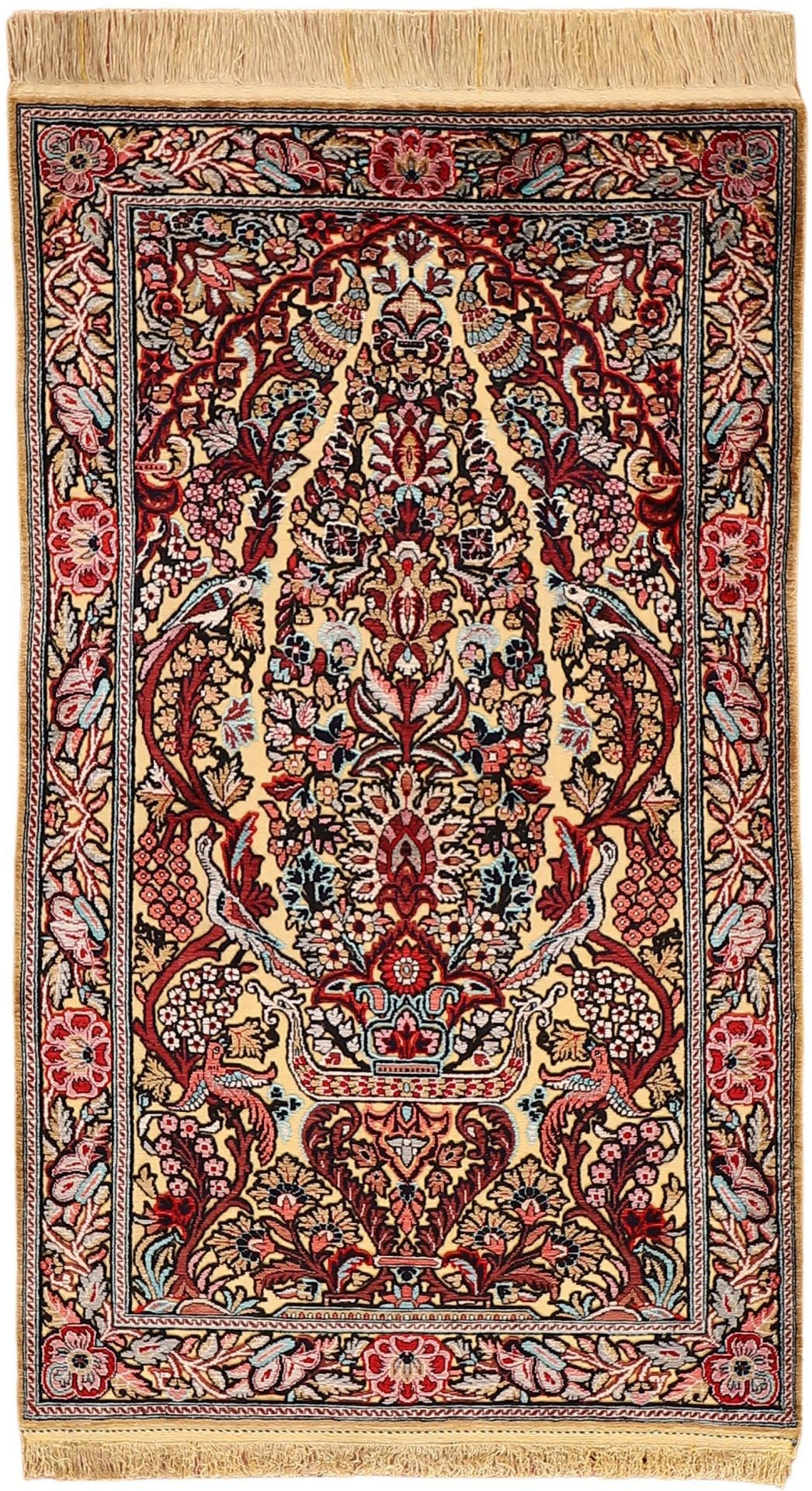
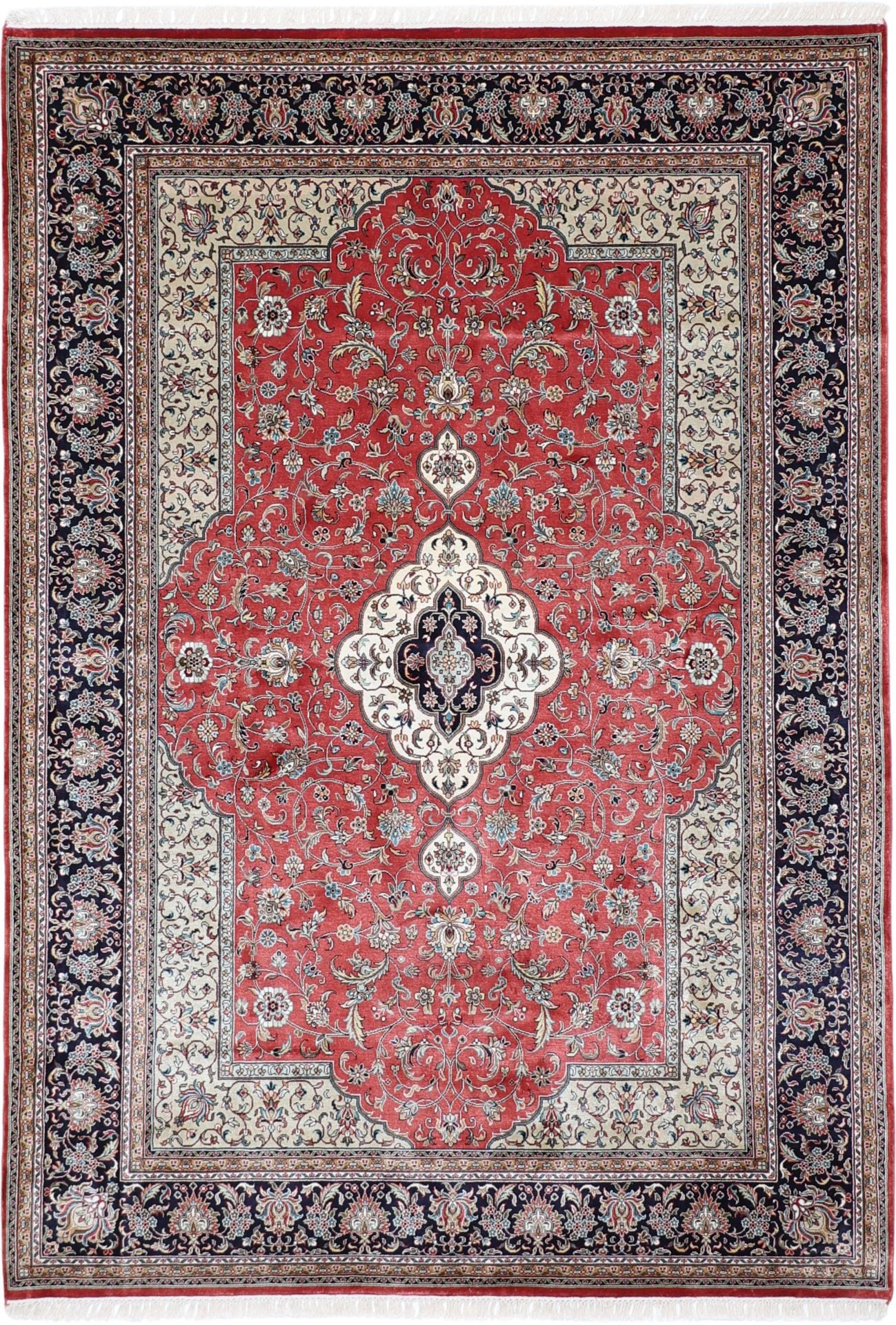
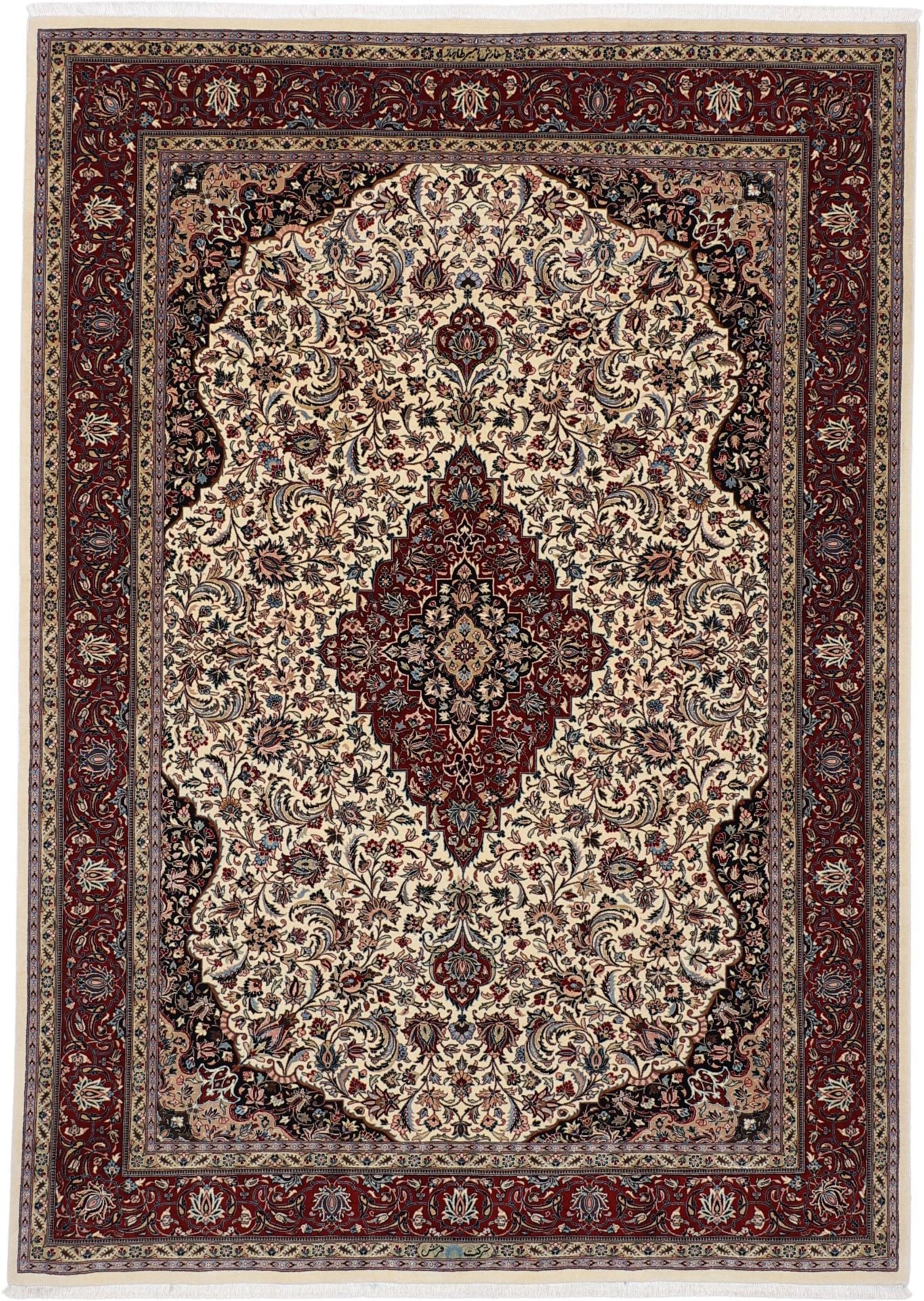
Floral patterns are found in many Iranian carpets and symbolize the beauty of nature. These designs are often highly detailed and reflect the appreciation for garden art in Iran.
geometric pattern
Geometric designs are found in carpets from certain regions of Iran, such as... Kerman or Mashhad widespread. They represent the mathematical harmony and order valued in Persian art.
Tiermotive
Some carpets also feature depictions of animals, often with mythological or spiritual significance. These patterns can depict various species of birds, lions, or horses and are often complexly integrated.
Care and maintenance of carpets
Carpet care is crucial to maintaining its longevity and beauty. Here are some tips for proper care:
Regular cleaning
Regular cleaning is important to remove dust and dirt. Use a vacuum cleaner with a soft brush or a special carpet cleaning cloth.
Professional cleaning
It's recommended to have carpets professionally cleaned every few years, especially if they're subject to heavy wear. Improper cleaning can damage the carpet.
Avoid direct sunlight
Direct sunlight can fade the colors of a carpet. Use curtains or blinds to protect the carpet from the sun.
Carpets and their role in interior design
Rugs play a central role in interior design, contributing to the coziness and style of a room. They can act as a visual focal point in a space or be used as a harmonious element to complement other furniture.
color and material selection
Choosing the right rug depends heavily on the color and material selection in the room. A vibrant hand-knotted rug can add color and character to a neutral space, while a simple rug can enhance the elegance of a luxurious room.
For different rooms
The use of rugs varies depending on the room. In the living room, larger rugs can define the space, while smaller rugs in bedrooms or hallways provide inviting accents.
Carpet styles and their variety
The world of carpets is rich and diverse. Here are some of the most popular carpet styles from different regions:
Persian carpets
Famous for their craftsmanship and use of vibrant colors and intricate patterns, Persian carpets are often the first choice for lovers of traditional craftsmanship.
Kashmir carpets
These rugs are known for their softness and elegance. They are made from cashmere wool and feature subtle, elegant patterns.
Kilim-carpets
KilimFlat-woven carpets are lightweight and durable. They are often used in modern interiors and come in many colorful patterns.
Berber-carpets
These traditional rugs originate from North Africa and are known for their coarse texture and lack of complex patterns. They are often in natural tones and bring warmth to any room.
Final section
Carpets are not only functional objects, but also works of art that tell stories and represent cultures. Iranian carpets, in particular, with their rich history and distinctive style, offer a fascinating blend of tradition and modern design. When choosing a carpet, remember that every fiber, pattern, and color is part of a rich narrative that can enhance your home. Invest in a high-quality carpet, and you'll not only acquire a piece of craftsmanship, but also an heirloom that can last for generations.
FAQ
1. How can I tell if a carpet is of high quality?
The quality of a carpet can be determined by several factors:
- Check the number of knots per square centimeter; the higher the knot count, the finer the carpet.
- Pay attention to the materials; genuine wool and silk are indicators of high quality.
- Check the workmanship; a well-knotted rug will have clean edges and consistent patterns.
2. How often should I clean my carpet?
The frequency of cleaning depends on usage, but generally, you should have your carpet professionally cleaned every 6 to 12 months. Regular vacuuming can help remove dust and dirt and extend the life of the carpet.
3. How can I protect my carpet from damage?
To avoid damage to your carpet, please note the following:
- Use felt underlays to protect the carpet from wear and slipping.
- Keep it away from direct sunlight to prevent the colors from fading.
- Avoid placing heavy furniture on the carpet as this may cause pressure marks.