The Art of Fineness: Kashmir and its Exquisite Kashmiri Carpets
Carpets: The fascination and fineness of Kashmiri carpets
Carpets are not just simple floor coverings; they are an expression of art, culture, and tradition. In many cultures around the world, carpets are an integral part of home life, serving both aesthetic and symbolic functions. Kashmiri carpets from the Kashmir region of India are particularly renowned for their exquisite craftsmanship. These carpets represent one of the highest forms of textile art, as they carry a rich history and cultural significance in addition to their beauty. In this article, we will explore the history, manufacturing process, different styles, and proper care of Kashmiri carpets to understand why they are considered true masterpieces.
The history of Kashmiri carpets
The history of carpet weaving in Kashmir dates back to the 15th century, when the region was under the influence of Persian culture. Traders and artisans brought their knowledge and techniques to Kashmir, leading to the creation of the unique Kashmiri carpets. These carpets were initially made for royalty and the wealthy elite and were often decorated with intricate patterns and symbols depicting regional flora and fauna.
Over the centuries, carpet production in Kashmir evolved and became a distinctive craft. The carpets are not just aesthetic products, but also embody the region's heritage and tradition. Kashmiri weavers use techniques passed down from generation to generation, keeping the art of carpet weaving alive.
The manufacturing process of Kashmiri carpets
The production of a Kashmiri rug is a laborious process that requires considerable time, skill, and patience. Each rug is unique and can take several months or even years to complete. The process begins with the selection of wool, which traditionally comes from Kashmiri goats. This wool is known for its exceptional softness and durability.
1. Selection of wool
The quality of the wool used is crucial for the production of a high-quality rug. Cashmere wool is harvested from goats in the cold altitude of Kashmir and has a natural luster that gives the rugs a luxurious appearance. After harvesting, the wool is cleaned, dyed, and prepared for the weaving process.
2. Dyeing the wool
Dyeing is often done with natural dyes derived from plants and minerals. These natural dyes give the rugs vibrant, lasting colors. The colors vary from soft earth tones to vibrant reds and blues, depending on the rug's design.
3. Weaving the carpet
Weaving is done on traditional handlooms, allowing precise control over the pattern and density of the weave. There are several weaving techniques used in the production of Kashmiri rugs, including knotted weave, which offers high density and detail. Weavers can place thousands of knots per square meter, giving the rugs impressive texture and durability.
4. Pattern and design
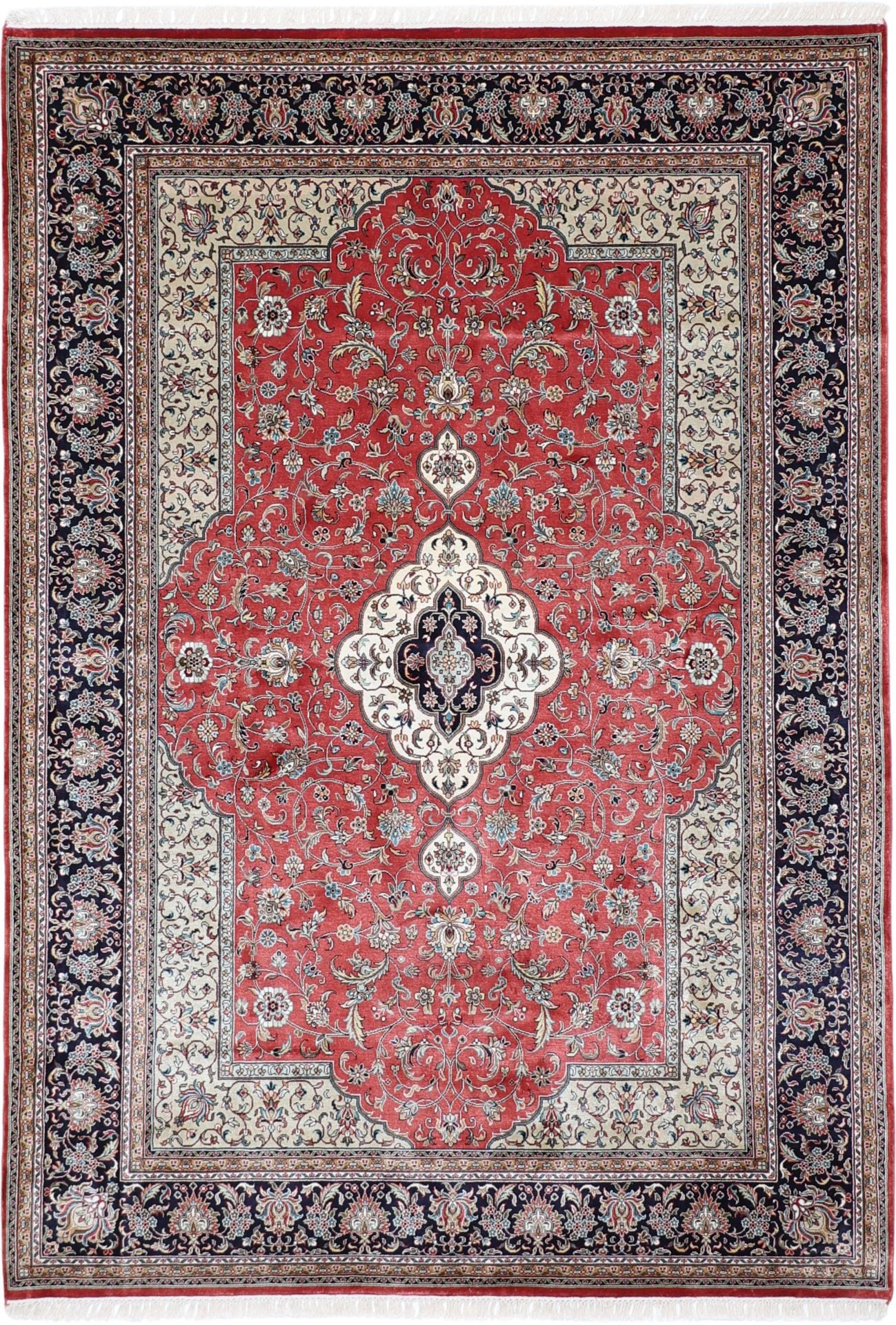
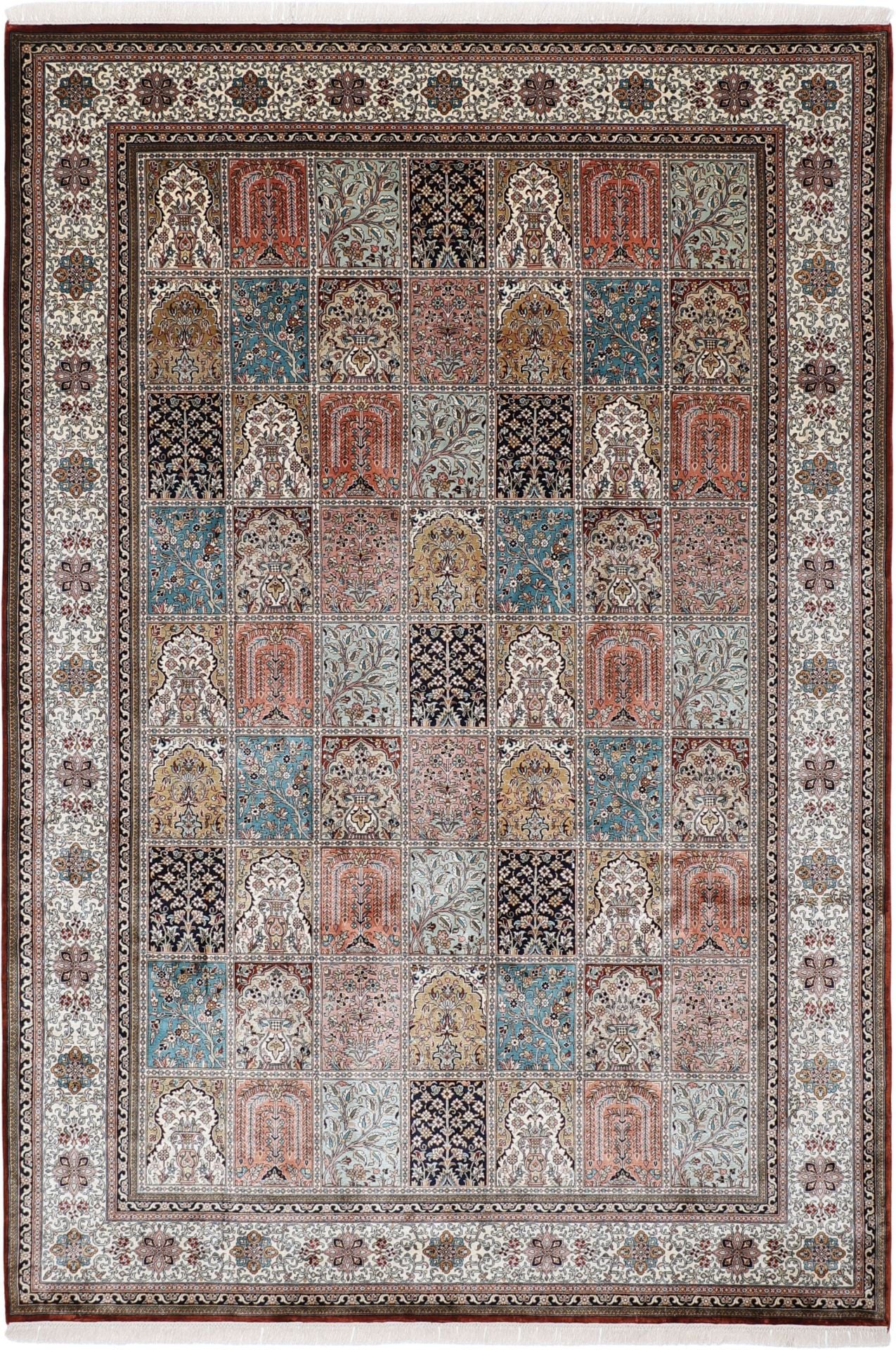
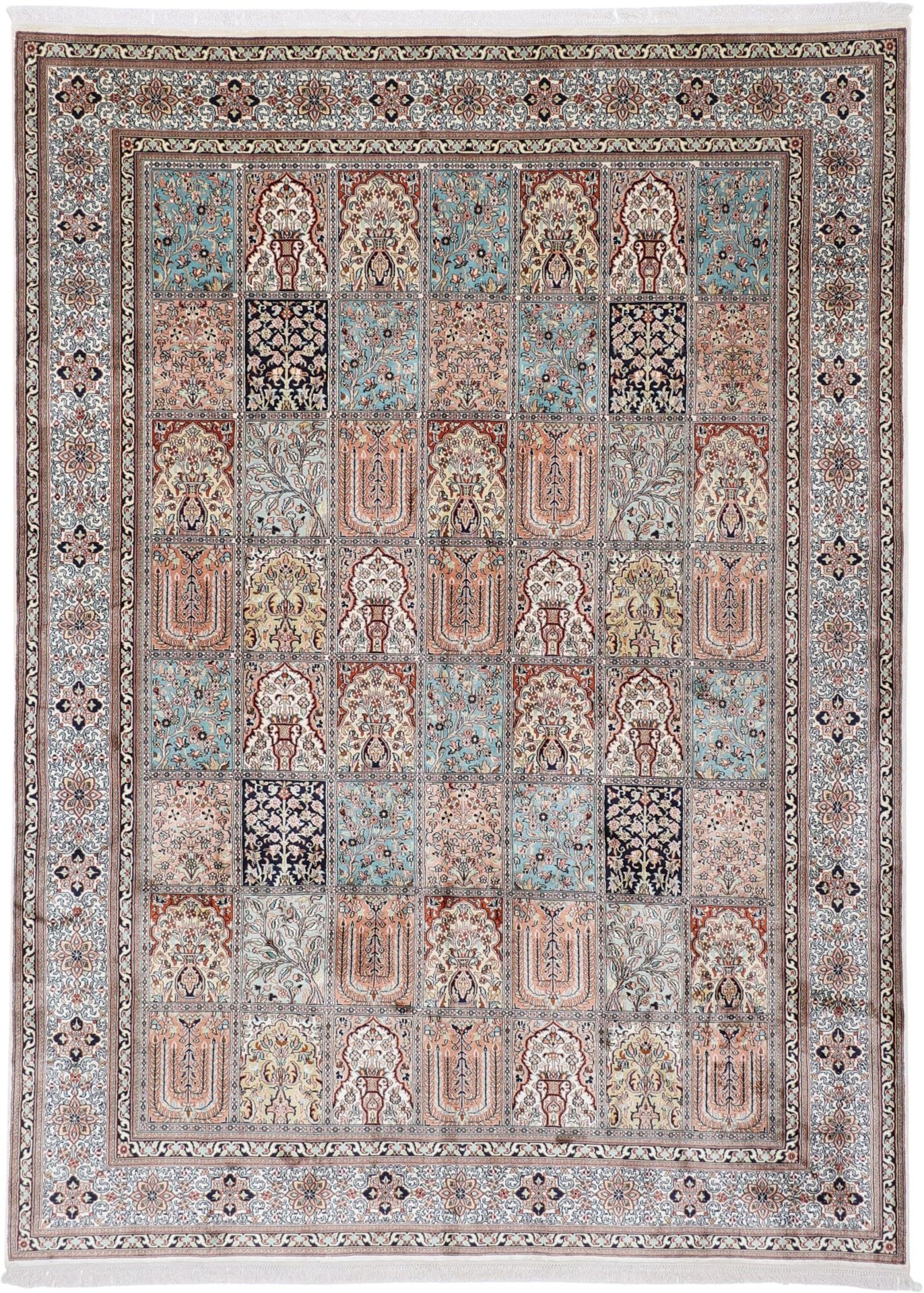
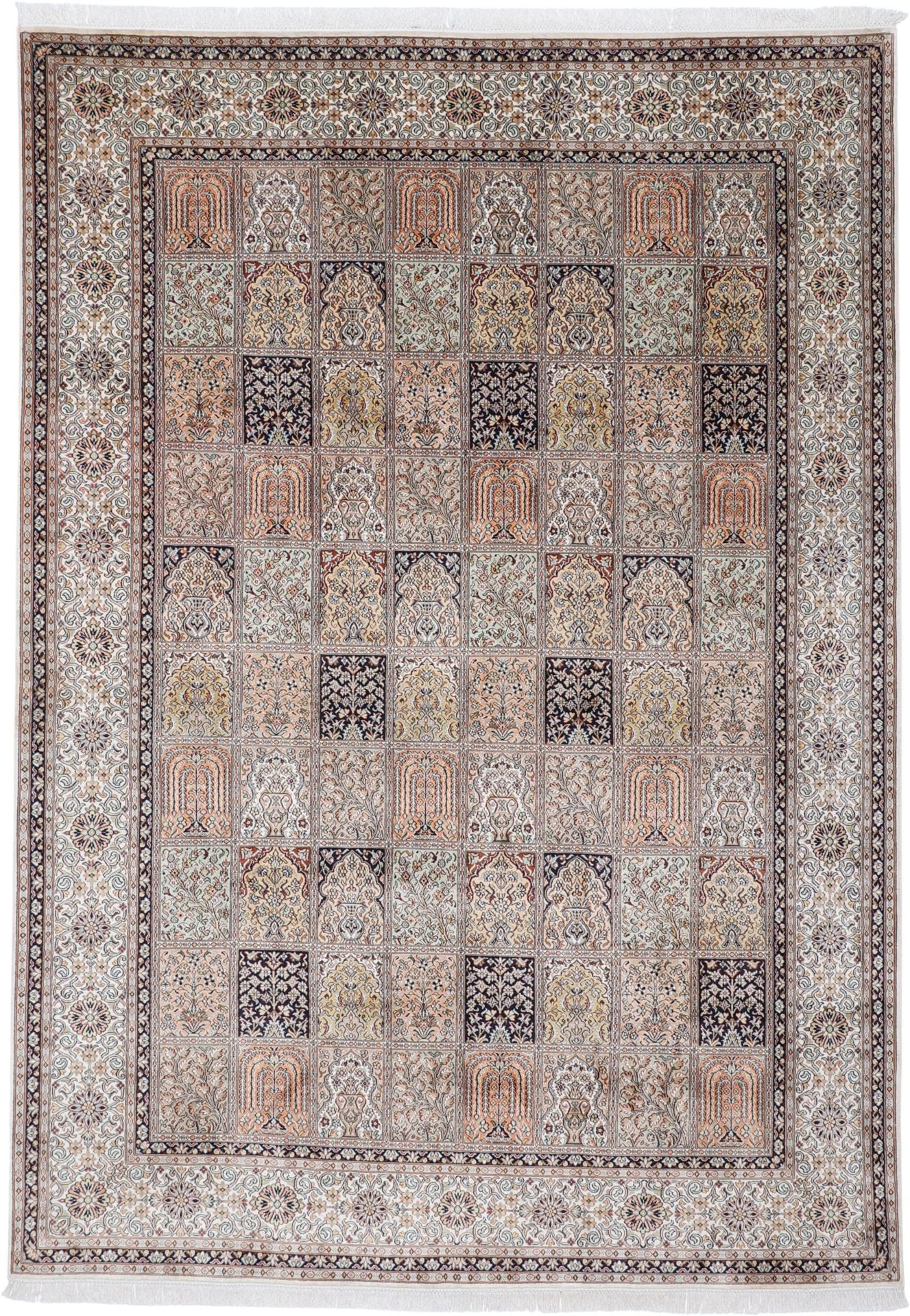
The designs of Kashmiri carpets are often inspired by nature and feature floral elements, geometric patterns, and intricate arabesque-like motifs. Each pattern carries symbolic meaning and tells a story deeply rooted in Kashmiri culture. Popular designs include the "Aari" and the "Kashmiri Chinar”, both of which are known for their beauty and fine detail work.
Types of Kashmiri Carpets
There are a variety of styles and techniques used in the production of Kashmiri rugs. Each style has its own distinctive characteristics and uses. The most common types are:
1. Hand-knotted carpets
These rugs are hand-knotted, which contributes to their high quality and durability. Hand-knotted Kashmiri rugs are often the most sought-after and expensive due to the labor-intensive nature of their production.
2. Machine-made carpets
Unlike hand-knotted rugs, machine-made Kashmiri rugs are produced in factories. These rugs are often cheaper and more readily available, but do not offer the same quality and attention to detail as hand-knotted rugs.
3. Chobi carpets
Chobi rugs, also known as "natural-colored rugs," are known for their earthy tones and use of natural colors. These rugs are particularly popular for their simple and elegant designs, making them a perfect fit for modern living spaces.
The importance of caring for Kashmiri carpets
Kashmiri rugs are not only investments in art and craftsmanship, but also heirlooms that can be passed down from generation to generation. Therefore, proper care is crucial to preserving their beauty and longevity.
1. Regular cleaning
It's important to clean carpets regularly to remove dust and dirt. Use a vacuum cleaner with a gentle brush attachment to avoid damaging the wool fibers. Avoid over-vacuuming, as this can damage the fibers.
2. Professional cleaning
Professional cleaning is recommended if the carpet is heavily soiled or has stains. Professional cleaning tools and techniques ensure that the carpet is treated gently and its colors do not fade.
3. Avoid direct sunlight
Avoid placing the rug in direct sunlight, as UV rays can bleach the colors. Use curtains or blinds to protect the rug. Also, make sure the rug isn't placed in damp areas to prevent mold growth.
Carpets as part of the interior design
Rugs play a crucial role in interior design and can significantly influence the overall look of a room. They add texture and warmth, define spaces, and create a cozy atmosphere. When choosing a rug, pay attention to the colors, patterns, and sizes to ensure it complements the existing decor.
1. Carpets in different rooms
Rugs are suitable for every room in the house, be it the living room, bedroom, or dining area. In living rooms, larger rugs can define the conversation area, while smaller rugs in bedrooms can add a welcoming touch. In the dining area, a rug under the dining table can provide both style and functionality.
2. Choice of color and pattern
The choice of colors and patterns is crucial. Darker colors can make a room feel more cozy, while lighter colors can lighten it up. When choosing patterns, make sure they harmonize with the existing furniture and create symmetry in the room.
3. Carpets as works of art
Kashmiri rugs are not only functional home accessories, but also true works of art. They can be used as tasteful wall decorations or as tapestries. This transforms any room into a gallery while showcasing the craftsmanship that goes into each rug.
Conclusion
Kashmiri rugs are more than just floor coverings; they are a symbol of craftsmanship, history, and cultural heritage. The attention to detail in the manufacturing process, as well as the variety of designs and colors, make these rugs special pieces in any home. When choosing a rug, it's worth considering various aspects, from the quality of the wool and the manufacturing method to proper care and integration into the interior design. A Kashmiri rug is not only an investment but also a way to make your home unique and preserve a piece of history. By choosing a Kashmiri rug, you bring a piece of rich tradition and unparalleled craftsmanship into your home.
FAQ about Kashmiri carpets
1. How do I recognize a genuine Kashmiri carpet?
A genuine Kashmiri rug is characterized by the use of high-quality cashmere wool, hand-knotted knots, and unique, detailed patterns. The rug should also be of a certain thickness, and the backing should have a uniform weave. Look for certificates or proof of origin.
2. Are Kashmiri carpets expensive?
Kashmiri rugs are often more expensive than machine-made rugs due to the intricate handcrafting and high-quality materials used. However, there's a wide price range depending on size, design, and materials used. Invest in quality to ensure the rug will last.
3. How can I remove stubborn stains from my Kashmiri rug?
For stubborn stains, you should consult a professional to ensure the carpet is not damaged. For smaller stains, you can use a mild soap solution and a soft cloth. When cleaning, always use gentle movements and avoid damaging the wool.